
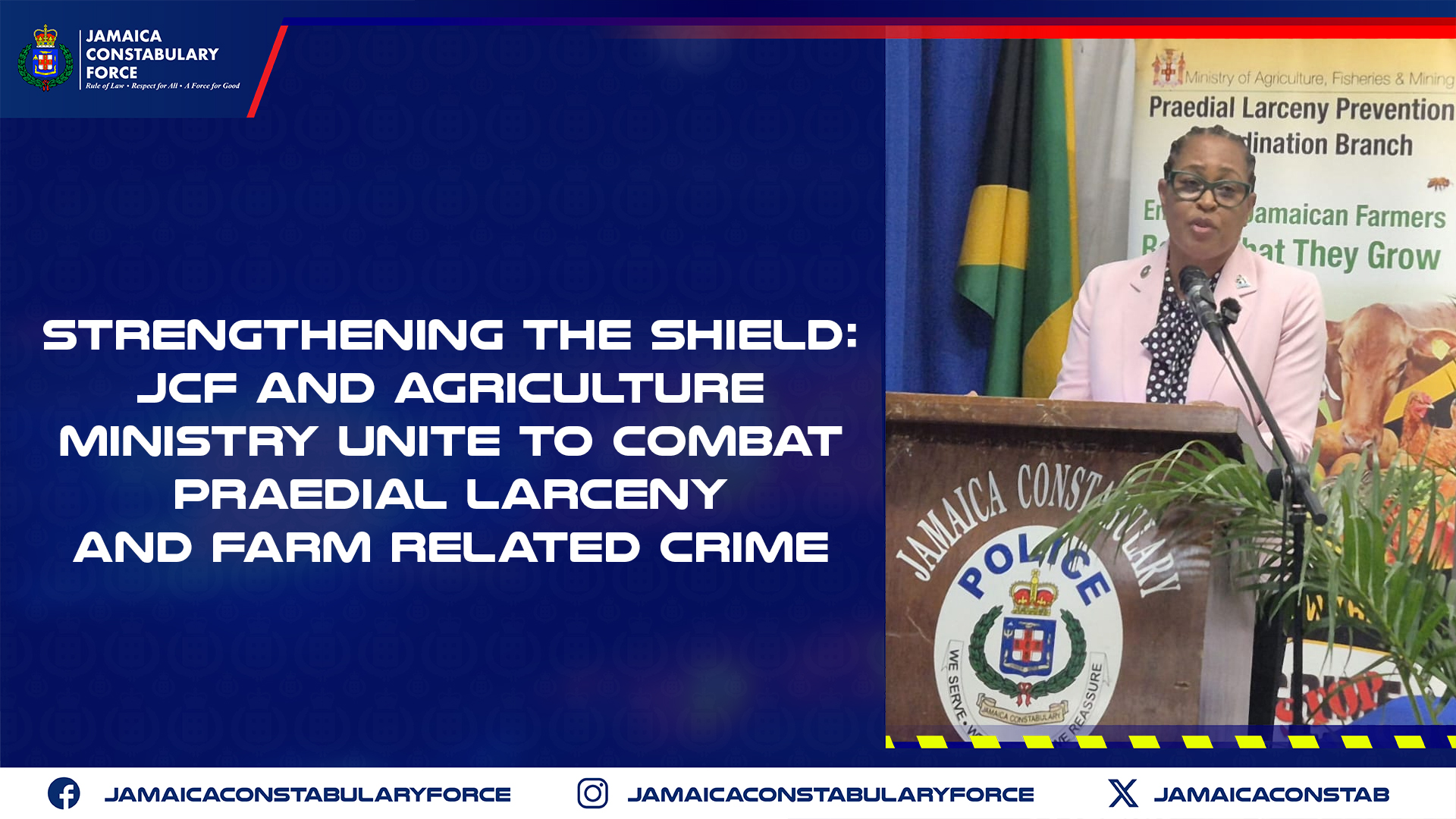
STRENGTHENING THE SHIELD: JCF AND AGRICULTURE MINISTRY UNITE TO COMBAT PRAEDIAL LARCENY AND FARM RELATED CRIME
On Thursday, March 5, 2026, the Police Officer’s Club in Kingston became the strategic hub for a landmark initiative aimed at safeguarding Jamaica’s food security. The Jamaica Constabulary Force’s (JCF) Agricultural Protection Branch (APB), in a high-level collaboration with the Ministry of Agriculture, Fisheries and Mining’s Praedial Larceny Prevention and Coordination Branch, hosted a comprehensive Praedial Larceny Prevention Sensitisation Workshop. This event marked the first large-scale training session of its kind specifically designed for the entire APB staff, signalling the unity of the APB and the agriculture ministry against the theft of agricultural produce and livestock that plagues local farmers.

The workshop focused on equipping specialised officers with advanced skills in legislative framework, traceability, food safety, and agricultural crime investigation to drastically reduce the impact of praedial larceny on the Jamaican economy. The workshop’s atmosphere was one of rigorous professional development as distinguished officials gathered to support the initiative. Assistant Commissioner of Police (ACP) Charmaine Shand attended the seminar and brought greetings on behalf of Deputy Commissioner of Police (DCP) Warren Clarke, emphasising the JCF’s high-level commitment to rural policing. She encouraged the members to be proud of the role they play in the JCF, as they are specifically trained to safeguard the nation’s food supply.
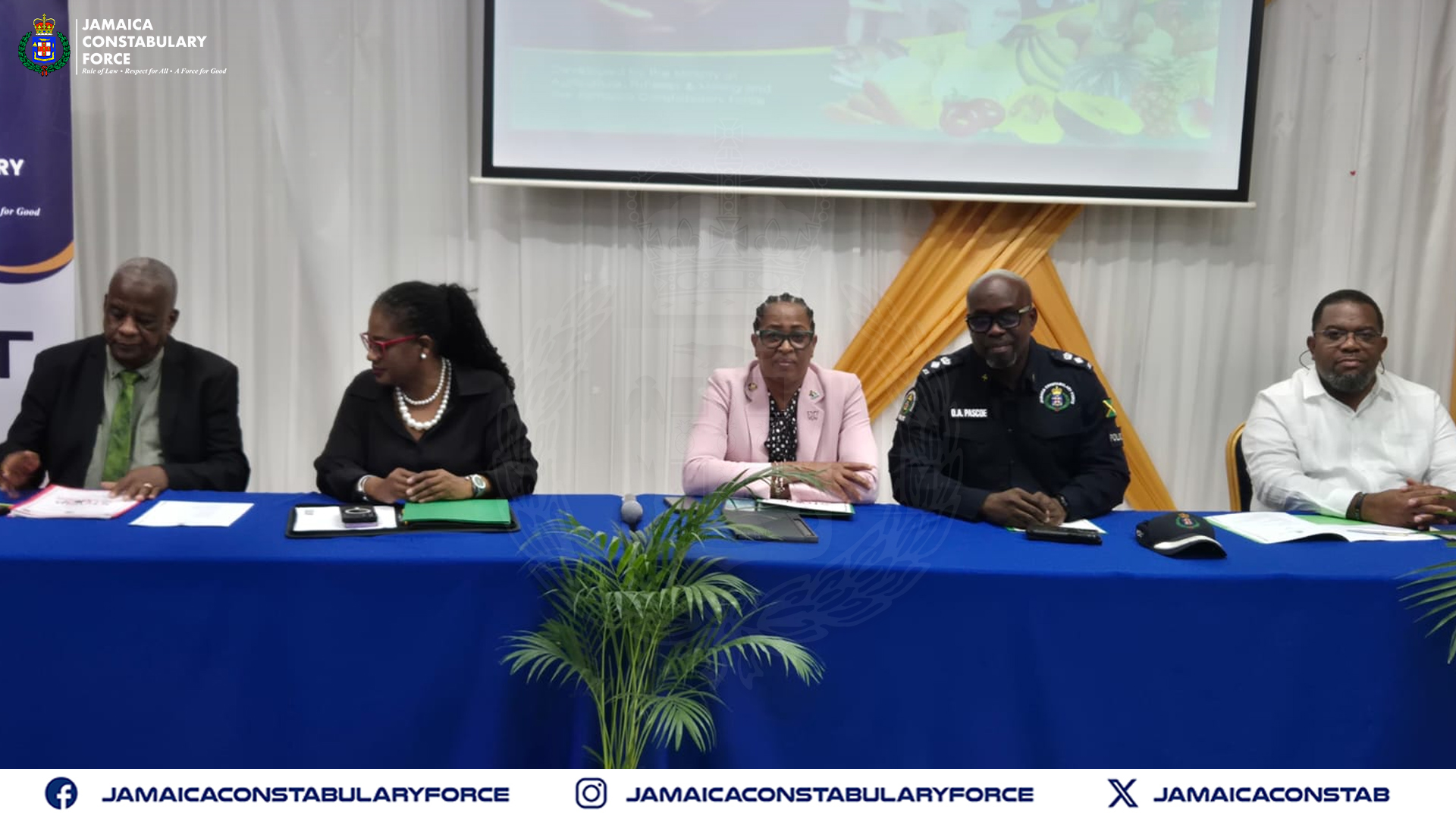
ACP Shand encouraged the lawmen and women to maintain their integrity and carry out their duties effectively. Joining ACP Shand in bringing greetings was the Honourable Franklin Witter, Minister of State in the Ministry of Agriculture, Fisheries and Mining, who highlighted the critical intersection between law enforcement and national food safety. Minister Witter expressed thanks to the JCF for the strategic vision displayed in the forming of the APB and highlighted that the collaboration of various stakeholders has and will continue to curb the plague of praedial larceny that continues to affect the Jamaican farmers and has even cost some of them their lives. Meanwhile, the workshop curriculum is meticulously crafted to cover the “farm-to-fork” security chain, including the legal intricacies of the Agricultural Produce Act, the importance of traceability in preventing the sale of stolen goods, and the public health risks associated with unregulated meat produce. A pivotal moment of the workshop came during the charge by Senior Superintendent of Police (SSP) Oral Pascoe, the Commanding Officer of the APB. Delivering a stern yet motivating charge to his members, SSP Pascoe underscored the weight of their responsibility. “You are the frontline defenders of our nation’s sustenance,” SSP Pascoe declared. “Our farmers cannot continue to toil only for criminals to reap the rewards. I charge you to apply the investigative techniques and case management strategies learned here today to ensure that every file we send to court is airtight and every perpetrator is accountable.”

He emphasised that these sessions are vital because they bridge the gap between traditional policing and the specialised nuances of agricultural law, ensuring officers are not just reactive but proactive in dismantling criminal networks. Furthermore, the importance of these sensitisation sessions cannot be overstated. As praedial larceny evolves into a more organised form of crime, the JCF must remain ahead of the curve through continuous education. By mastering food safety and public health regulations, officers are better prepared to intercept illicit goods before they reach the market, thereby protecting consumers and the livelihoods of thousands of Jamaican families. The workshop represents a significant step toward a more resilient agricultural sector, where the law serves as a robust shield for those who feed the nation.