
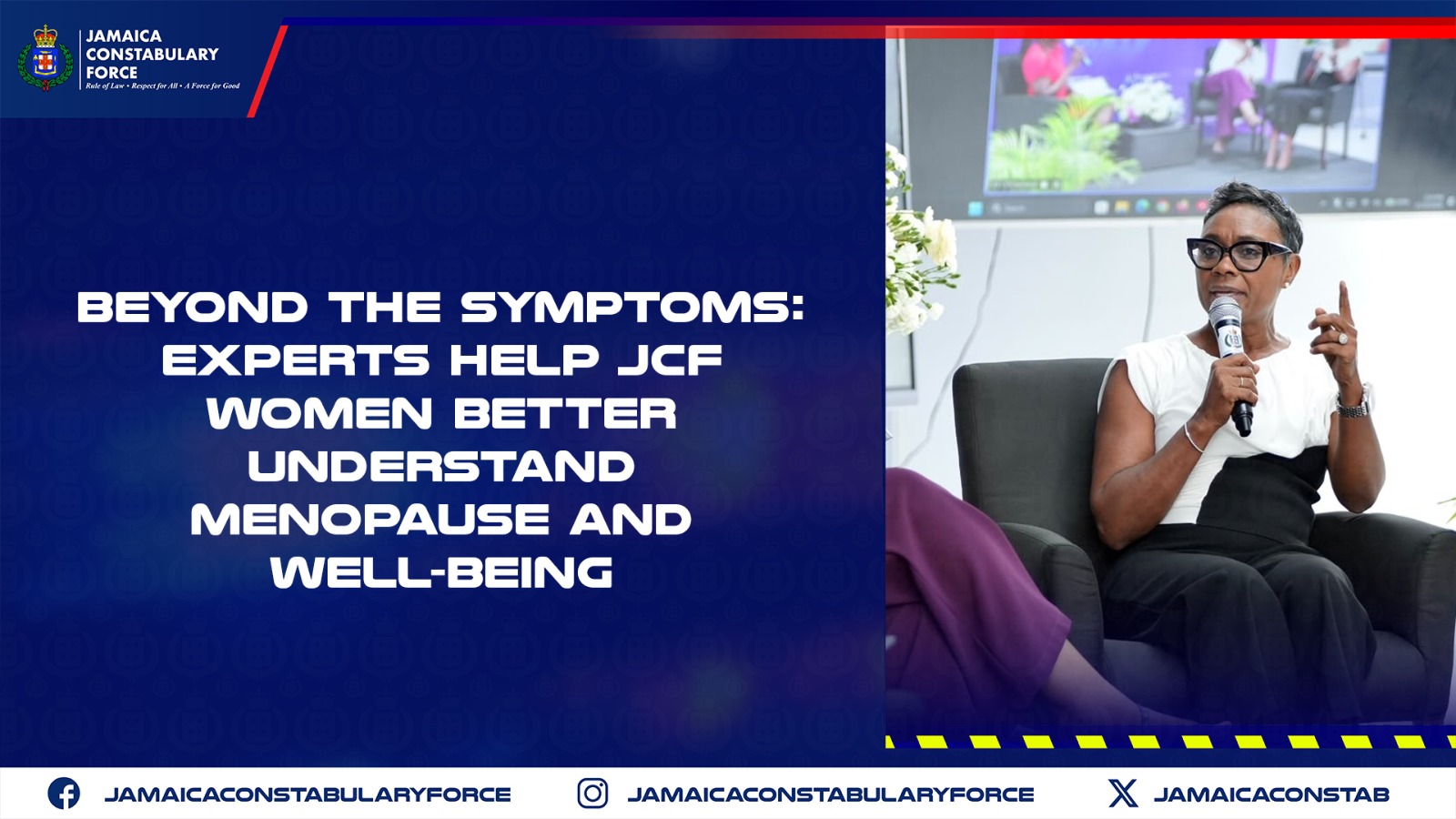
BEYOND THE SYMPTOMS: EXPERTS HELP JCF WOMEN BETTER UNDERSTAND MENOPAUSE AND WELL-BEING
Understanding what is happening to the body is important, but so too is learning how to navigate the emotional and psychological changes that may accompany menopause.
That combination of knowledge and practical support formed a key part of the Jamaica Constabulary Force’s (JCF’s) perimenopause and menopause awareness conference, where specialists encouraged women to approach the transition with greater understanding, self-compassion and confidence.
Mrs. Sonia Wynter, CEO and Associate Clinical Psychologist at Tea House Therapy, focused on practical approaches to emotional well-being, including sleep hygiene, breathing techniques and emotional regulation.
She encouraged women to be intentional about creating conditions conducive to quality rest and to practise simple breathing techniques before they are needed in stressful situations.
“It can become your default when you get activated, that you’re able to take a deep breath. That can really help to sort of soothe your nervous system a little bit, so that you can then choose your response,” Mrs Wynter explained.
Her message emphasised developing healthy practices consistently, rather than waiting until difficult moments arise.
Obstetrician-gynaecologist and menopause specialist Dr Astrid Batchelor then helped participants explore the physical and clinical dimensions of menopause, describing it as a normal life transition rather than a measure of a woman’s competence or capability.
“You are trained to be strong, resilient, and always ready to face challenges. Menopause is more than just hot flashes or the end of menstruation and your reproductive lives. It’s a significant transition that can affect our physical health, emotional well-being, relationships, and even our performance at work,” Dr Batchelor said.
Her presentation explored facts and common misconceptions about menopause, using real-life scenarios and scientific explanations to help participants better understand the transition.
Importantly, women were encouraged to rethink the narrative around menopause, viewing it not simply as an ending but as another life stage in which women can continue to grow and thrive.
“We will all eventually, as women, go into menopause. So it’s something to look forward to, and it’s something that, at this critical time in our lives, we need to make sure that we can thrive,” Dr Batchelor noted.
The experts formed part of a wider programme that brought together health, government and JCF perspectives on menopause and workplace wellbeing. Other presenters included The Honourable Juliet Cuthbert-Flynn, Minister of State in the Ministry of National Security and Peace; Mrs. Sharon Coburn Robinson, who brought greetings on behalf of The Honourable Olivia Grange, Minister of Culture, Gender, Entertainment and Sport; and Dr O’Dale Henry of the JCF’s Medical Services Branch. Deputy Commissioner of Police Karina Powell Hood welcomed participants, while Paula-Anne Porter Jones moderated the session.
The conference gave participants an opportunity to replace uncertainty and misconceptions with information, while also arming them with practical strategies for supporting their emotional wellbeing.
The message from the experts was clear: menopause is a transition to be understood and navigated, not a condition that diminishes a woman’s capacity, contribution or potential.