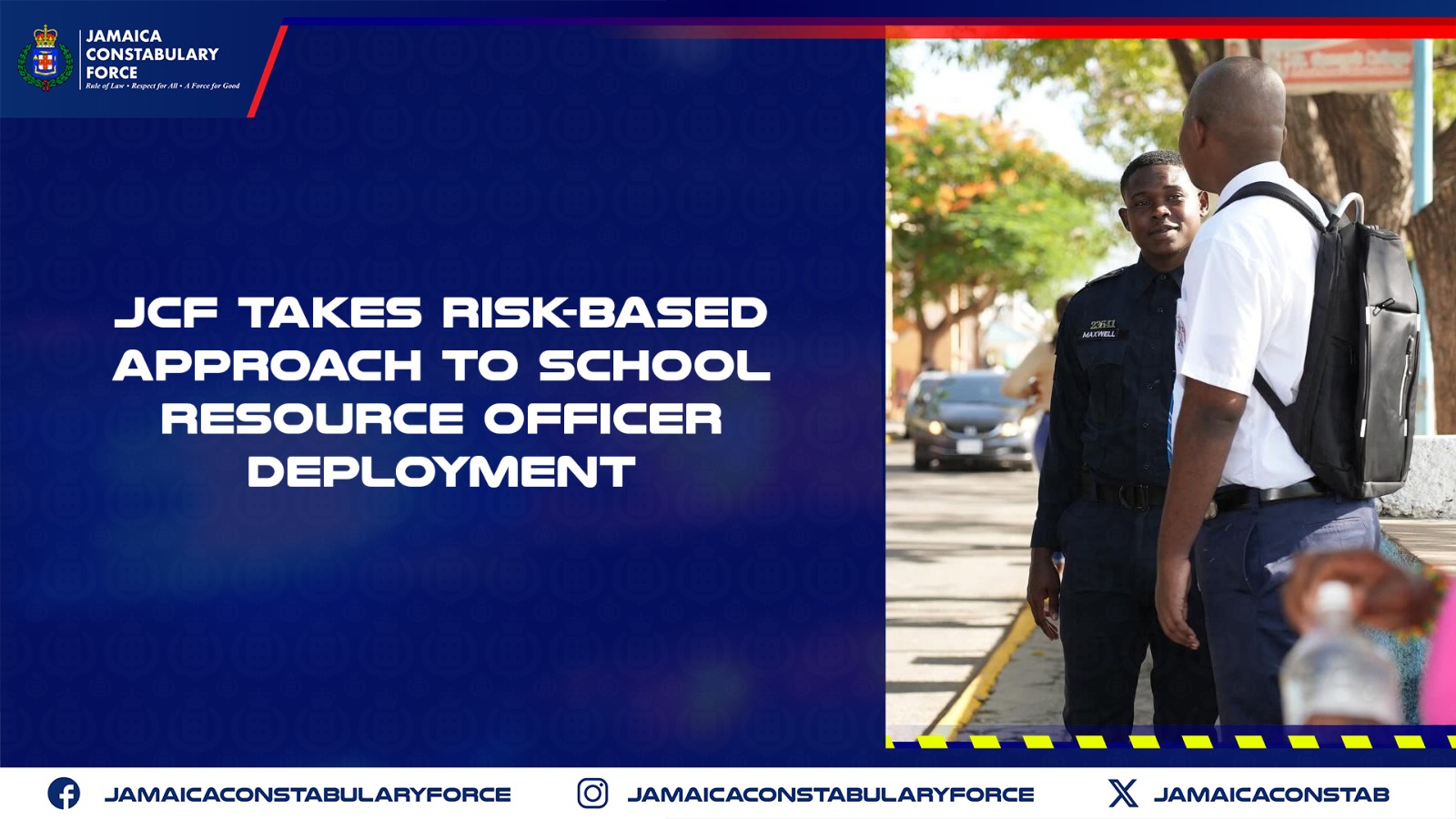
JCF TAKES RISK-BASED APPROACH TO SCHOOL RESOURCE OFFICER DEPLOYMENT
A school may have a respected name, a proud history and a strong reputation, but that does not mean it is without challenges. For the Jamaica Constabulary Force (JCF), understanding those challenges is key to determining where School Resource Officers (SROs) are needed.
Speaking on the recent Force for Good Podcast, National Safe Schools Coordinator, Sergeant Andrew Williams, explained that SRO deployment is done in partnership with the Ministry of Education, with factors such as a school’s location, challenges and overall risk level considered.
“We have some schools that may not require what we call a residential School Resource Officer but may instead benefit from a visiting School Resource Officer,” Sergeant Williams explained.
He said schools that express an interest in having an SRO are assessed to determine the most appropriate level of support. However, Williams also noted that schools must be open and honest about the challenges they are facing.
“There’s a common misconception…that once an SRO is in the school, it means that my school is bad. That is not the case. We offer professional service. We operate in the best interest of the child,” Sergeant Williams noted.
He further explained that once an issue involving a child is identified, established referral pathways can be used to connect the child with the appropriate support. According to Williams, schools being forthcoming about the challenges they face is critical, as delayed reporting can result in police intervention only after a situation has escalated.
The JCF is encouraging schools to view SROs not as an indication of problems, but as partners in creating safer and more supportive learning environments. Early communication allows concerns to be identified sooner and the right support to reach students when it matters most.